
From Somewhere
I’ve been thinking a lot lately about what it means to be from a place. To belong somewhere, not just in a practical sense, but deep in your bones.
I grew up just across the street from where my own children are now growing up. And yet, even after living on this farm for more than a decade, I catch myself wondering when—or if—I get to say we are truly from here. I was born in Colorado. My husband was born in Detroit. But our children were born in the local hospital, brought home to this farm, and—God willing—they won’t leave it until they’re off chasing their own adventures as adults.
Still, some days I feel the pull of other roots. The quiet echo of my grandfather’s voice seems to find me when I’m working outside, especially. Sometimes it’s in the way the breeze cuts through the trees, or the smell of fresh-cut grass. Other times, it’s in something simpler—like this morning, when I realized I’d accidentally bought black cherry ice cream instead of strawberry. A mistake the kids will not forgive. But I laughed, because it means I’ll have it all to myself—and because it reminded me of him.
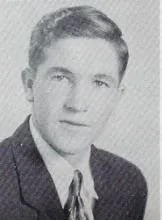
My grandfather, Dean Sanders, loved black cherry ice cream. And butter pecan. And pistachio. As a kid, I was always disappointed by the lack of “real” flavors in his freezer. No neon blue, no cookies and cream, no cookie dough. If I was lucky, they had Neapolitan. But now, those “adult” flavors feel like memory in a bowl. This week, I’m looking forward to sharing that ice cream with my mom and talking more about her dad.
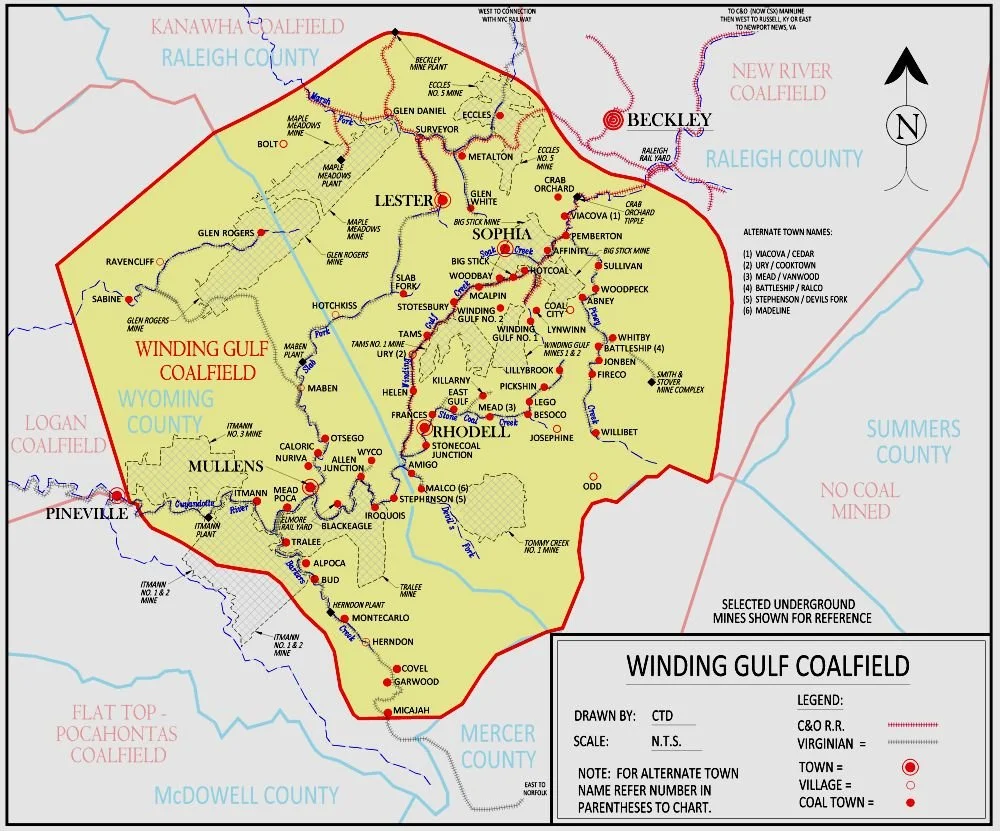
Dean Sanders grew up in a holler near Rhodell, West Virginia—a middle child between his older brother, Bill, and younger sister, Ella. His parents, Raymond and Nellie Sanders, had moved from Zionville, North Carolina, to Tommy Creek Holler, where Raymond and his brother Coy leased over 100 acres from the coal company for just $99 a year. It was land they worked and lived on—home for their families, carved from the steep folds of West Virginia hills.
After Raymond and Coy died, their widows kept paying the lease. No one ever changed the paperwork, but the families held on. Bill and his wife Sis continued paying even after Grandma Nellie passed. But eventually, the coal company refused to renew the lease—they were opening the Tommy Creek mine. That’s when Bill and Sis left Tommy Creek and bought a home in Coal City. Ella stayed nearby too, settling in Mullens. But my grandfather did what many of his generation did: he married, moved on, and carried Appalachia with him wherever he went.
He married Shirley Maynard—Ella’s best friend from high school—and joined the Army. My mother was born on an army base in Alabama, her brother came along in Ohio, and the youngest was born in Michigan, where my grandparents eventually settled. My grandfather worked as an airplane mechanic and retired from Zantop Airlines. Then, just as they’d always planned, he and Shirley moved to Marion, Virginia—back to the mountains—across the street from Shirley’s sister Norma. Back, as my mother still says, to “God’s Country.”
As a child, all our family vacations were road trips across Kentucky, Tennessee, West Virginia, Virginia, North Carolina, and Florida. We didn’t go to Disney—we went to porches and picnic tables and crowded kitchens. To aunts and uncles and cousins. To the places that raised the people who raised me. I’ve always said “I was born in Colorado, raised in Michigan, but my family is from the South.” That was always my shorthand for a truth that felt bigger than geography.
And now I’m raising children on a piece of land that doesn’t carry my family’s name, but carries our footprints, our fruit trees, our goats and garden beds and chicken scratch. A place I’ve walked for more than ten years, long enough that I sometimes feel it whispering back.
Maybe that’s how you know you’re from somewhere—not when you arrive, but when the place starts to speak your name in return.
And sometimes, I hear my grandfather in the quiet.
He says hello in little ways. Like when the coffee’s so pale and weak you can see the bottom of the cup from the top. My sister calls it “Grandpa coffee.” We try to drink it because it makes us feel close to him.
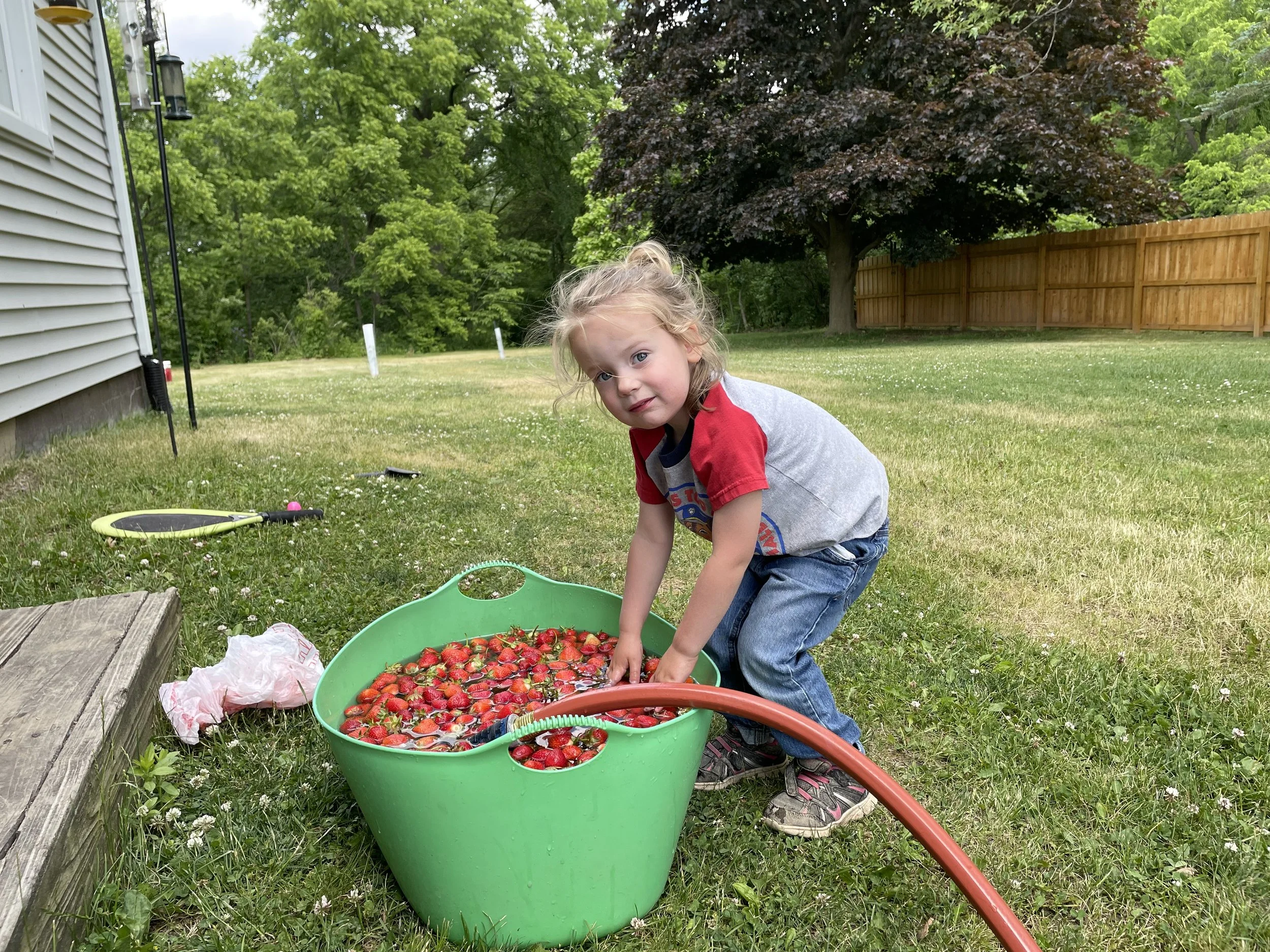
I hear him, too, when I’m sitting in the yard, topping strawberries or snapping green beans or peeling potatoes, but especially while picking raspberries. There’s something sacred in that kind of work—the quiet, repetitive motions that feed a family from the land itself. That’s where he finds me. That’s where I find him.
What I remember most clearly about him, though, is not how he lived—but how he loved.
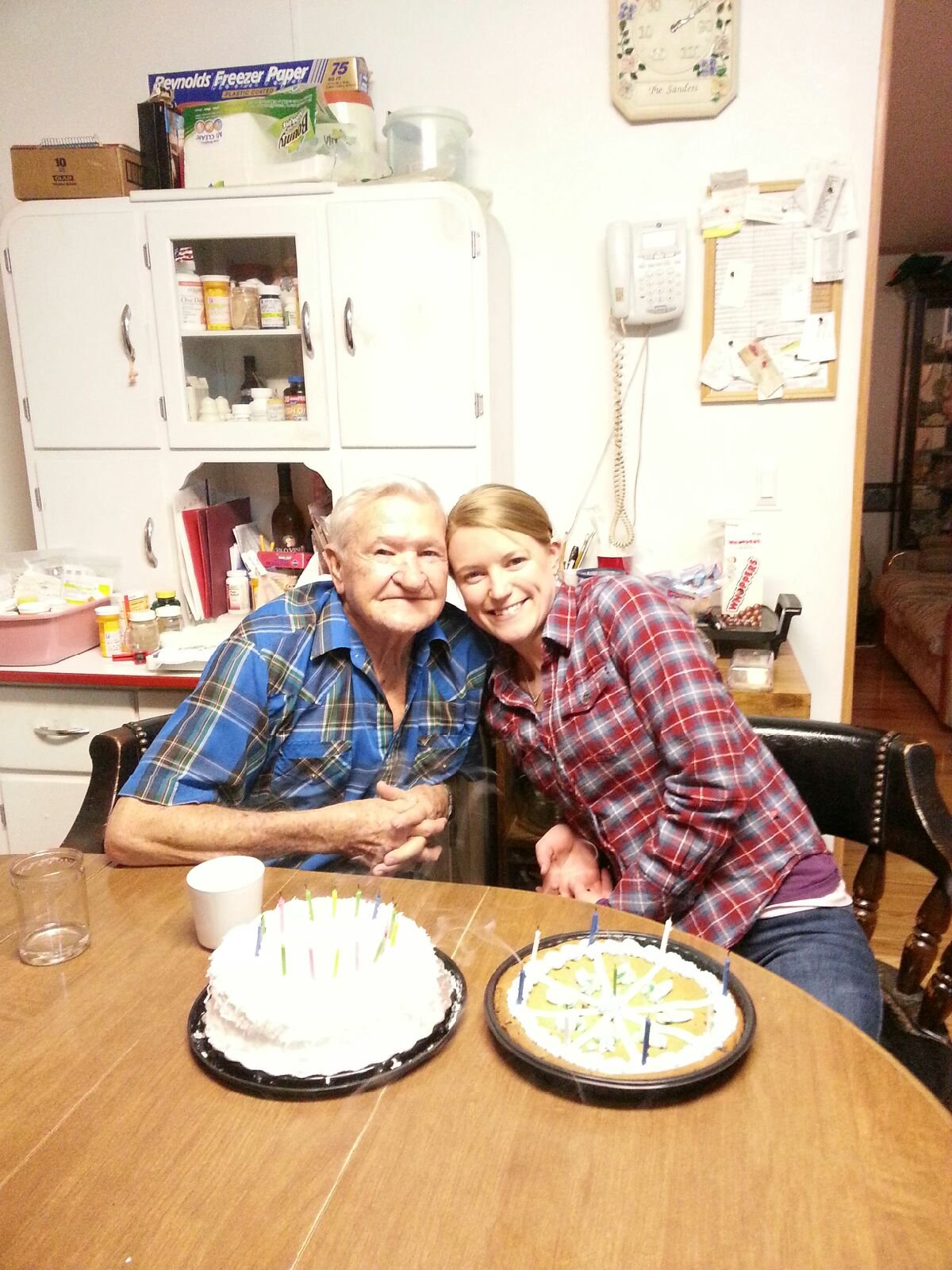
In the long, hard years of my grandmother’s illness, I watched my grandfather turn quiet, stubborn loyalty into a daily act of grace. One night, when discussing hospice or a care home for Grandma, he slammed his hand on the table and said, with absolute finality, “Shirley took care of me my whole life. I’m going to take care of her for the rest of hers.” And that was that. He never left her side. Grandpa slept in a chair next to her hospital bed in the living room, holding her hand every night. That was the love we got to witness. That’s the kind of love I want to pass on.
When I needed to decide who I wanted to be—what kind of partner, what kind of parent, what kind of person—I chose to hold Shirley and Dean in my heart as a model of commitment. Their story gave me something to reach for. And now, they’re buried side by side in the Marchant family cemetery, tucked in the hills of Marion, Virginia. Back in the mountains of Appalachian, close to where they started. From somewhere.




If this hit you in the feels and you liked it, you might also enjoy:



We’ve been working on a “holistic goal” for our farm—a guidepost for the life we’re building, the land we’re caring for, and the community we love. At its core? Helping people experience the ordinary magic found in everyday nature.