The $5 Chicken: What’s the Real Cost?
If you’ve ever walked into Costco or Kroger and walked out with a hot rotisserie chicken for $4.99, you’ve experienced one of the most famous retail strategies in the grocery world: the loss leader.
These chickens are sold below cost—yes, grocery stores actually lose money on them—because they draw you in. Once you’re there for a cheap bird, odds are good you’ll grab some soda, a salad kit, or a bottle of wine.
But while your receipt might feel like a win, there’s a hidden price: to the animal, the environment, your health, and small farms like ours.
How Industrial Chickens Are Raised
To make a profit at that price point, chickens must be raised cheaply, quickly, and in huge numbers. Here’s what that typically looks like:


Crowded in barns with 30,000 to 50,000 birds
No access to the outdoors or natural light
Standing on litter soaked with urine and feces
Fed a high-calorie, grain-based diet optimized for speed, not nutrition
Butchered at just 5–6 weeks old
These chickens are bred to grow so fast that many struggle to walk under their own weight. It’s a system designed for maximum efficiency—not animal welfare or food quality.
The Environmental Impact of Cheap Chicken
Industrial poultry farming comes with serious environmental consequences:
Manure overload: A single large poultry operation can generate millions of pounds of waste annually, much of it stored in open pits or spread on land with minimal regulation.
Water contamination: Excess nitrogen and phosphorus runoff contributes to toxic algae blooms, groundwater pollution, and “dead zones” in lakes and rivers.
Air quality: High concentrations of ammonia and fine dust particles cause respiratory issues in nearby communities.
Fossil fuel use: Ventilation, lighting, feed transport, and processing all rely heavily on fossil energy.
Antibiotic and antimicrobial resistance: Resistance happens when bacteria evolve to survive the drugs we use to kill them, especially antibiotics.
Our pasture-based systems spreads manure naturally at levels that don’t run off into waterways, doesn’t require ventilation and lighting thus reducing energy use, and helps sequester carbon through rotational grazing. Every time we move a chicken tractor, we’re improving soil structure and fertility—no synthetic fertilizer needed. Plus by focusing on prevention through environment and management, we avoid the need for constant medication and sanitizing.
Nutrition: Why Pasture-Raised Chicken Is Different
The way a bird is raised directly affects its nutritional value. Studies have shown that pasture-raised poultry has:
2 to 3 times more omega-3 fatty acids, which reduce inflammation and support brain and heart health
Higher levels of vitamin E, vitamin A, and beta-carotene
A more balanced omega-6 to omega-3 ratio
Increased conjugated linoleic acid (CLA), which has been linked to anti-cancer and fat-burning effects
These nutrients come from the diverse foraged diet our chickens enjoy—grass, clover, insects, and soil minerals—not from a bag of standardized feed.
Also? Our chicken tastes better. It’s more flavorful, more satisfying, and cooks up beautifully.
🐔 Why Our Chicken Costs More (And Why It Should)
At Goldfinch Farm, we raise our chickens the way we believe food should be raised—with care, intention, and transparency. That means we do things differently from industrial operations, and yes, it means our chicken costs more. Here's why:
Small batches, not mass production:
We raise our meat birds in limited numbers, which allows us to give each flock close attention. We know what they eat, how they behave, and how they’re doing every single day. There are no anonymous birds here—just well-cared-for animals in a system that honors their lives.Fresh pasture daily:
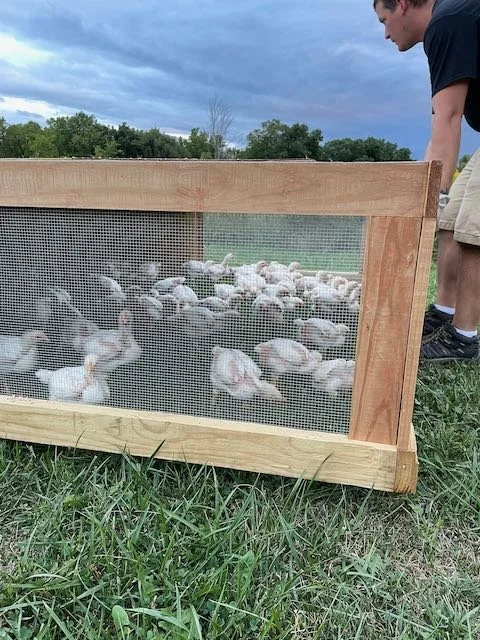
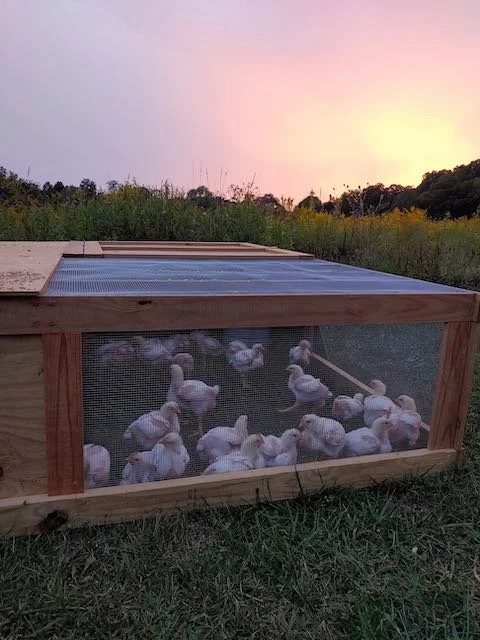
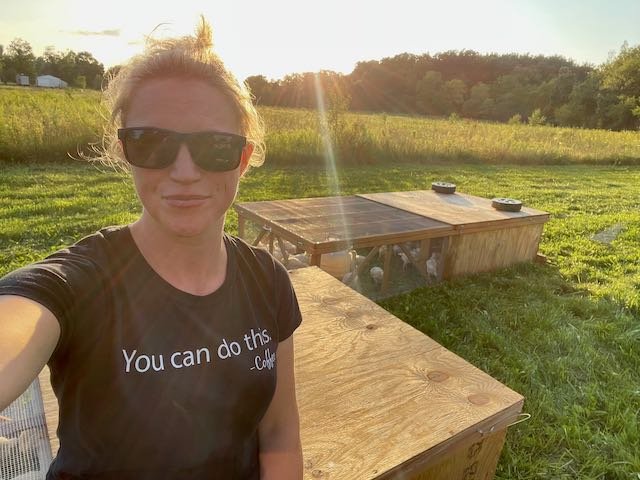
Our chickens live in mobile pasture shelters that we move every day. That means they get a fresh “salad bar” of grass, clover, and insects, while also spreading their manure across the field to fertilize the soil naturally. This is regenerative agriculture in action—restoring the land while producing nutrient-dense food.Sunshine, clean air, space to move:
Industrial chickens are raised in barns with artificial light and limited ventilation, but ours spend their days outdoors, scratching in the dirt, sunbathing, and doing chicken things. That natural movement builds stronger muscles, reduces disease risk, and leads to better flavor and texture in the meat.No antibiotics, ever:
Because of their healthy environment and low-stress lifestyle, our chickens don’t need routine medications. We believe in prevention, not prescriptions—and that means healthier birds, and ultimately, healthier food for your family.Longer grow-out time:
Industrial birds are butchered at 5–6 weeks old. Ours take longer—8 to 10 weeks—because they grow at a more natural pace. That extra time costs us more in feed and labor, but results in richer flavor, better nutrition, and better animal welfare.👐 Human-scale farming:
Every part of this process involves real human hands: feeding, moving, checking water, and observing bird health. No conveyor belts. No automated barns. Just a small team (and sometimes our kids) showing up daily, rain or shine, to do the work.
When you buy a chicken from Goldfinch Farm, you’re not just paying for meat. You’re paying for:
Clean water and healthy soil
Animal welfare and respect
A food system that values people, not just profits
A relationship with a real farm and real farmers
Every dollar you spend is a vote for the kind of agriculture you want to exist. And we’re grateful every time you vote for us.
Ready to Taste the Difference?
We only raise a few batches of meat birds per season, and we’re heading into our summer break. This is your last chance to get fresh chicken until mid-September.
🛒 Pre-order pasture-raised chicken for July 15th pickup (or September, or October)
🥚 Eggs available all summer
🍲 Stewing hens, necks, feet, hearts, livers & gizzards in stock now
Thank you for supporting small farms and real food. It matters more than you know.
— Megan & the Goldfinch Farm crew